SOUTH AUSTRALIA · 18 MIN READ
Selling a house privately in SA.
A complete 2026 guide for South Australian and Adelaide homeowners. Valuation, the Form 1 disclosure and cooling-off period, marketing, negotiation and settlement, and how to keep the commission you would have paid an agent.

I have spent 15 years in this industry and called over 2,000 auctions. In that time I watched the agent’s job get easier and the commission stay the same. On a median Adelaide house worth around $1.01 million in 2026, even an agent charging 2.1% takes roughly $21,000 plus GST and marketing for work that buyers now do most of themselves online. This guide walks through the entire private sale in South Australia, from setting a price to settlement day, with the SA legal steps spelled out, including the Form 1 Vendor Disclosure Statement and the two-day cooling-off period that make selling here a little different from Western Australia, so you can sell with confidence and keep the money that would have gone to commission.
Quick answer: Selling a house privately in SA is legal and straightforward. You handle the pricing, marketing and negotiation, use a licensed platform to reach the major portals, and a conveyancer or solicitor to prepare the Form 1, the contract and settlement. On a median Adelaide house, that keeps roughly $16,000 to $19,000 in commission in your pocket.
Key takeaways
- Selling a house privately in SA is completely legal.
- Homeowners can save thousands in agent commission fees.
- Accurate valuation from comparable sales is critical before you list.
- SA requires a Form 1 Vendor Disclosure Statement, which your conveyancer prepares and serves on the buyer.
- SA gives a private treaty buyer two clear business days of cooling-off, so a signed contract is not instantly unconditional.
- realestate.com.au and Domain listings require a licensed agency, which you reach through Unreserved.
- Marketing and negotiation are where the sale price is won or lost.
- Settlement is usually managed by a licensed conveyancer or solicitor and registered by Land Services SA.
Why more SA homeowners are selling privately
Three things changed the maths. First, the portals took over. Buyers now find homes on realestate.com.au and Domain, not by walking into an agency, which means the part an agent once owned, access to buyers, is something a private seller can reach for a few hundred dollars. Second, Adelaide values have climbed hard through the last few years, and a percentage commission climbs with them even though the work does not, so sellers are paying closer attention to what they hand over. Third, the tools caught up. AI valuation, online listings, standard contracts and electronic settlement let an organised owner run a campaign that looked impossible ten years ago.
The result is a growing market of for sale by owner sellers across SA who want control and want to keep their equity. Selling privately is not about cutting corners. It is about paying for the parts you need and skipping the percentage that no longer reflects the service. If you want the short version of the whole journey first, our guide to selling your home privately is the place to start.
It helps to break down what the commission actually buys. An agent’s fee covers pricing advice, a portal listing, photography, hosting inspections, fielding enquiries and negotiating offers. Useful work, all of it. The question is whether it is worth a percentage of your home’s value. On a $1.01 million Adelaide sale, even a 2.1% commission is more than $21,000, yet the listing costs a few hundred dollars, the photography a few hundred more, and the negotiation is a handful of conversations you are perfectly capable of having. The percentage model was built for an era when the agent controlled access to buyers. That era ended when the portals took over. Selling privately simply prices the service at what it costs, not what your house is worth.
Can you legally sell your own home in SA?
Yes. No law in South Australia, or anywhere in Australia, requires you to use a licensed real estate agent to sell your home. Consumer and Business Services, the SA regulator that licenses agents and conveyancers, sets out the rules they must follow, and nothing in them obliges a homeowner to appoint an agent. You take on the work an agent would do, and you make every decision on price, marketing and offers. South Australia does carry one meaningful piece of pre-sale paperwork that WA does not, the Form 1 Vendor Disclosure Statement, and I cover that in full below. You can read the SA regulator’s guidance on Consumer and Business Services for the buyer and seller rules that apply.
There is one practical limit. You cannot list directly on realestate.com.au or Domain as a private individual. Both portals only accept listings from agencies that hold a real estate licence. To appear where buyers look, you list through a licensed platform that holds the licence and publishes on your behalf. That is what Unreserved does: you get a presence on the major portals and keep control of the sale, without engaging a commission agent. See how it works for the full picture.
Private sale vs real estate agent: what is the difference?
The work is largely the same. The difference is who does it, how much control you keep, and what it costs. Here is the comparison side by side.
| Factor | Traditional agent | Private sale (Unreserved) |
|---|---|---|
| Cost | 2.1% commission + GST + marketing (around $23,000 plus marketing on a $1.01M Adelaide house) | One flat fee, typically a few thousand dollars all in |
| Who sets the price | Agent recommends, often anchors low for a quick sale | You decide, backed by data |
| Buyer contact | Through the agent | Direct, so you answer questions the way only an owner can |
| Portal access | Yes | Yes, through the licensed platform |
| Control | Limited once you sign the agency agreement | You hold every decision |
| Conflict of interest | A faster sale can suit the agent more than you | None: your result is the only result |
An agent earns close to the same fee whether your home sells for $990,000 or $1.03 million, so the incentive is a quick sale, not the last dollar. A private sale removes that gap. For the broader numbers behind agent fees, see our guide to real estate agent commission in Australia, then run your own figure through the SA commission calculator.
The complete process of selling a house privately in SA
The journey runs in a clear order. Price the home, prepare it, get the legal paperwork and the Form 1 ready, list it, manage enquiries and inspections, negotiate the offer, sign the contract, then settle. The eight steps below cover each stage. Read it once end to end, then work the steps in sequence. One SA point to flag up front: the Form 1 must be served on the buyer with or before the contract, and it triggers the buyer’s two-day cooling-off period, so line up your conveyancer before you go to market.
Understanding your property’s value
Pricing is where private sales are won or lost. Set the price too high and the listing sits, grows stale and attracts lowball offers. Set it too low and you hand a buyer your equity. The goal is an accurate, defensible figure.
Use the comparable sales method. Find homes like yours sold within the last three to six months, ideally within one to two kilometres. Weigh land size, bedrooms and bathrooms, condition, parking and aspect. Favour sales that completed near the asking price over ones that sat for two months and sold under, because those tell you the market was not there at that level.
Free sources include the sold listings on realestate.com.au and Domain. For a faster, sharper read, Unreserved’s AI property valuation tool scores your home against comparable sales and weights the attributes buyers in your suburb pay for. Treat any single number as a starting point, then test it against real buyer interest in the first week.
Should you set a fixed price, a price range, or invite offers?
SA private sellers usually take a property to market at a fixed asking price or with offers above a stated figure, and the choice shapes how buyers behave. A fixed price is the simplest and the most transparent: buyers know exactly where you stand, which suits a private sale because there is no agent to read the room for you. An “offers above” guide invites a range and works when you are unsure of the ceiling, though whatever number you publish must be honest and supportable by comparable sales, as underquoting and misleading price conduct are against the law. Adelaide runs both auctions and private treaty, but a private treaty sale with a clear price suits a private seller best.
Whichever you choose, watch the first week closely. The number of enquiries, open inspection bookings and second inspections tells you more than any appraisal. Strong interest with no offers usually means the home shows well but the price is high. Plenty of offers below your number means the market has spoken, and a small, evidence-based adjustment beats letting the listing go stale.
Preparing your home for sale
Presentation moves the price more than almost anything else you control, and most of it costs little. Buyers judge a listing in seconds, and the photos carry that first impression. Work through the high-return jobs: declutter and depersonalise, deep clean, fix the small things that read as neglect, freshen tired walls with neutral paint, and tidy the garden and entry.
In Adelaide, character and outdoor living sell. Open the home to natural light for photography and open inspections, and lead with any alfresco area, deck, verandah or established garden, because outdoor entertaining carries a premium here. If you own a period home, the bluestone frontage, return verandah, high ceilings and original detail are worth showing off, since inner-Adelaide buyers pay for character. Styling helps most on empty or dated homes and stays optional once a home is already well furnished. Book professional photography either way, since the photos are what decide who clicks.
Spend your preparation money where buyers actually look:
- The entrance and street view. The first photo and the first ten seconds of an open inspection set the tone. A tidy entry, clean path and fresh front door do disproportionate work.
- Kitchen and bathrooms. These rooms move buyers most. You rarely need to renovate; clean grout, new tapware and a fresh coat of paint read as “cared for”.
- Light and clutter. Take down heavy curtains, swap dim globes for bright warm ones, and clear surfaces so rooms feel larger.
- Outdoor living. A clean alfresco, deck or verandah with a setting staged for two extends the apparent size of the home and plays to how Adelaide buyers actually live.
THE SA SELLING GUIDE
Selling privately in SA? Get the 24-page guide.
Everything on this page, plus the contract and disclosure detail, laid out as a guide you can work through offline. Written by an agent who ran 2,000+ auctions before building the alternative.
One email with the PDF attached. No agent will call you.Getting your legal documents ready
South Australia carries one distinctive piece of pre-contract paperwork, the Form 1, so get your documents ready before you list. That way you can move fast and stay compliant when an offer lands.
Understanding the Form 1 Vendor Disclosure Statement
This is the part of an SA sale that catches sellers from interstate off guard. South Australia requires the seller to give the buyer a Form 1 Vendor Disclosure Statement under Section 7 of the Land and Business (Sale and Conveyancing) Act 1994. The Form 1 discloses the particulars of the title, any encumbrances and easements, council and other statutory information, and details of any mortgage or charge over the property. In a private treaty sale, the Form 1 is served on the purchaser with or before the contract, and serving it is what starts the buyer’s cooling-off clock. Your conveyancer normally prepares the Form 1 for you, drawing the searches and certificates together so the disclosure is complete and accurate, because an incomplete or wrong Form 1 can give a buyer grounds to walk away later. Getting this ordered early is the single most important legal step in an SA private sale.
The contract of sale
South Australia uses a standard contract of sale, not the Offer and Acceptance form that Western Australia relies on. The contract sets out the price, the deposit, the settlement date and any conditions such as subject to finance or a satisfactory building inspection. Your conveyancer or solicitor prepares or reviews the contract so the terms are right before anyone signs. Once the buyer and seller have both signed, and the Form 1 has been served, the contract is on foot, subject to the cooling-off period and any conditions written into it.
Do you need a conveyancer or a solicitor?
South Australia has a strong licensed conveyancer profession, regulated by Consumer and Business Services, and this is who most private sellers use. A conveyancer prepares the Form 1, drafts or checks the contract, manages the title and settlement documents, and completes the transfer, usually for less than a solicitor charges. A solicitor is the safer choice if your sale has a legal complication, such as a deceased estate, a trust, a subdivision or a boundary issue. Either way, engage this professional before you list so the Form 1 and contract are ready to go. Budget roughly $800 to $1,800 for a private sale.
Advertising your property
Your listing is your shopfront. Strong photography, a clear headline and a description that sells the life in the home decide who clicks and who scrolls past.
How to list on realestate.com.au
A private seller cannot upload to realestate.com.au directly, because the portal only takes listings from licensed agencies. To get there, you list through a licensed platform that publishes on your behalf. Unreserved holds the licence, builds your listing and puts it on the major portals while you keep control of price and offers. This is the single biggest reach a private seller can buy, since the large majority of SA buyers start their search on the portals.
Other property advertising options
Widen the net beyond the big two. Domain, Homely and local Adelaide Facebook buy-and-sell and community groups all carry buyers. A quality signboard out front still works, especially for passing local interest. Share the listing across your own social channels, send it to your network by email, and ask the platform about a featured or premium upgrade if your suburb is competitive, since standard listings lose visibility in high-volume markets.
Managing buyer enquiries
Enquiries arrive fast once a listing goes live, and speed of reply shapes the result. Answer within a few hours, because a buyer who waits a day moves on to the next home. Keep a simple log of each enquiry, qualify gently by asking about their timeframe and whether they have finance in place, and book open inspections while interest is hot. As the owner, you answer questions about the home, the street and the neighbours with a credibility no agent can match.
Conducting open inspections
Open inspections turn interest into offers. Present the home the way it looked in the photos: clean, light, comfortable and free of clutter. Run a tidy, welcoming open and let buyers picture themselves living there.
- Run open inspections in small groups so you can talk to each party.
- Have a one-page info sheet ready: floor plan, council and water rates, strata or community levies if any, and school zones.
- Keep the title details and any strata or community documents on hand for serious buyers.
- Note who attends and how interested they seem.
- Follow up every attendee within 24 hours.
Negotiating offers like a professional
This is where sellers most often leave money behind, usually because they negotiate with one buyer and no pressure. The fix is competition. When more than one buyer is interested, let each know there is interest without bluffing, and invite their best offer. Hold your number with calm, and remember a buyer who has inspected twice and arranged finance is closer to their ceiling than their opening bid suggests.
Weigh more than the headline price. A clean offer with finance approved, a healthy deposit, and a settlement date that suits you can beat a higher offer loaded with conditions. Get the signed contract to your conveyancer quickly so the paperwork can move while the buyer is committed.
A simple framework keeps you in control of the conversation:
- Ask for offers in writing. A written offer with the buyer’s name, price, deposit, settlement date and any conditions is real. A number over the phone is a feeler.
- Never negotiate against yourself. If a buyer asks “what will you take?”, turn it around: invite their best offer. Dropping your own price before anyone has offered just resets the ceiling lower.
- Use competition honestly. When two buyers are interested, tell each there is genuine interest and set a deadline for best offers. Do not invent offers that do not exist.
- Hold your nerve on a single offer. A buyer who has inspected twice and lined up finance has already decided they want it. Silence and patience are worth real money here.
Understanding contracts, cooling-off and conditions in SA
Once you agree on terms, the buyer and seller sign the contract of sale, the Form 1 is served, and the buyer’s cooling-off period begins. This is the SA-specific sequence every seller here needs to understand.
The contract and the Form 1. The buyer and seller both sign the contract, and the seller serves the completed Form 1 on the purchaser with or before the contract. Serving the signed contract and the Form 1 is the moment that starts the cooling-off clock, which is why your conveyancer needs both documents ready and accurate before anyone signs.
The cooling-off period. South Australia gives a private treaty buyer two clear business days of cooling-off, which runs from when the purchaser receives the signed contract and the Form 1. During that window the buyer can withdraw. This does not apply to a purchase made at auction. So unlike a Western Australian sale, a signed SA contract is not instantly unconditional: build the two-day window into your timeline and do not treat the deal as locked until it passes.
Conditions. Most offers also come with conditions such as subject to finance approval, a satisfactory building and pest inspection, or the sale of the buyer’s own home. Each condition has a date by which it must be met. Once the cooling-off period has passed and the conditions are satisfied, the contract is unconditional and the settlement clock holds firm. Your conveyancer manages the dates and the documents from here.
Settlement and handover
Settlement is the finish line. After the cooling-off period passes and the conditions are met, your conveyancer and the buyer’s conveyancer prepare the transfer. The settlement period is negotiated in the contract and commonly runs around 30 to 60 days from the signed contract. Most SA settlements now complete electronically through PEXA: the conveyancers and banks meet in an online workspace, money and title move at the same moment, and the transfer registers with Land Services SA on the settlement day. You hand over the keys, the buyer takes possession, and the net proceeds land in your account. No commission cheque comes off the top.
What does it cost to sell a house privately in SA?
The costs are small and fixed, not a percentage. Here are the realistic 2026 ranges for an SA private sale.
| Cost item | Typical range | Notes |
|---|---|---|
| Conveyancer / solicitor | $800 to $1,800 | Required; prepares the Form 1, contract and settlement |
| Portal listing package | $700 to $1,400 | realestate.com.au and Domain via a licensed platform |
| Professional photography | $400 to $800 | Twilight and drone shots cost more |
| Signboard | $150 to $350 | Optional, useful for local interest |
| Building & pest inspection | $300 to $600 | Usually the buyer’s cost; some sellers pre-order to disclose |
All in, a private sale in SA usually lands between $2,500 and $5,000. For the full picture of every selling cost and where each one sits, see our guide to the cost of selling a house.
See your exact saving
Run your Adelaide or SA sale price through our commission calculator and see what an agent would charge versus a flat fee.
Open the SA commission calculatorHow much can you save by selling privately?
This is the number that matters. Compare the fixed cost of a private sale against a 2.1% commission on a median Adelaide house.
| On a $1.01M Adelaide house | Traditional agent | Private sale |
|---|---|---|
| Commission / fee | 2.1% = $21,210 | One flat fee |
| GST on commission | + $2,121 | Included |
| Marketing | $2,000 to $6,000 extra | Listing included in package |
| Total | $25,331 to $29,331 | ~$2,500 to $5,000 |
On a single median Adelaide sale, that is a saving on the order of $16,000 to $19,000 on commission alone, and more once you count marketing. SA commissions are fully negotiable and unregulated, with Adelaide averaging around 2.8% and some regional agents charging more, so the exact figure shifts with your price and agent. The direction never does. The table uses 2.1%, below the Adelaide average, so the comparison is conservative. For more on how those fees stack up, see our commission guide.
Median house values: Cotality Hedonic Home Value Index, capital cities, April 2026. Typical commission rates: 2025-26 industry surveys. Method and full table: Unreserved Commission Report 2026.
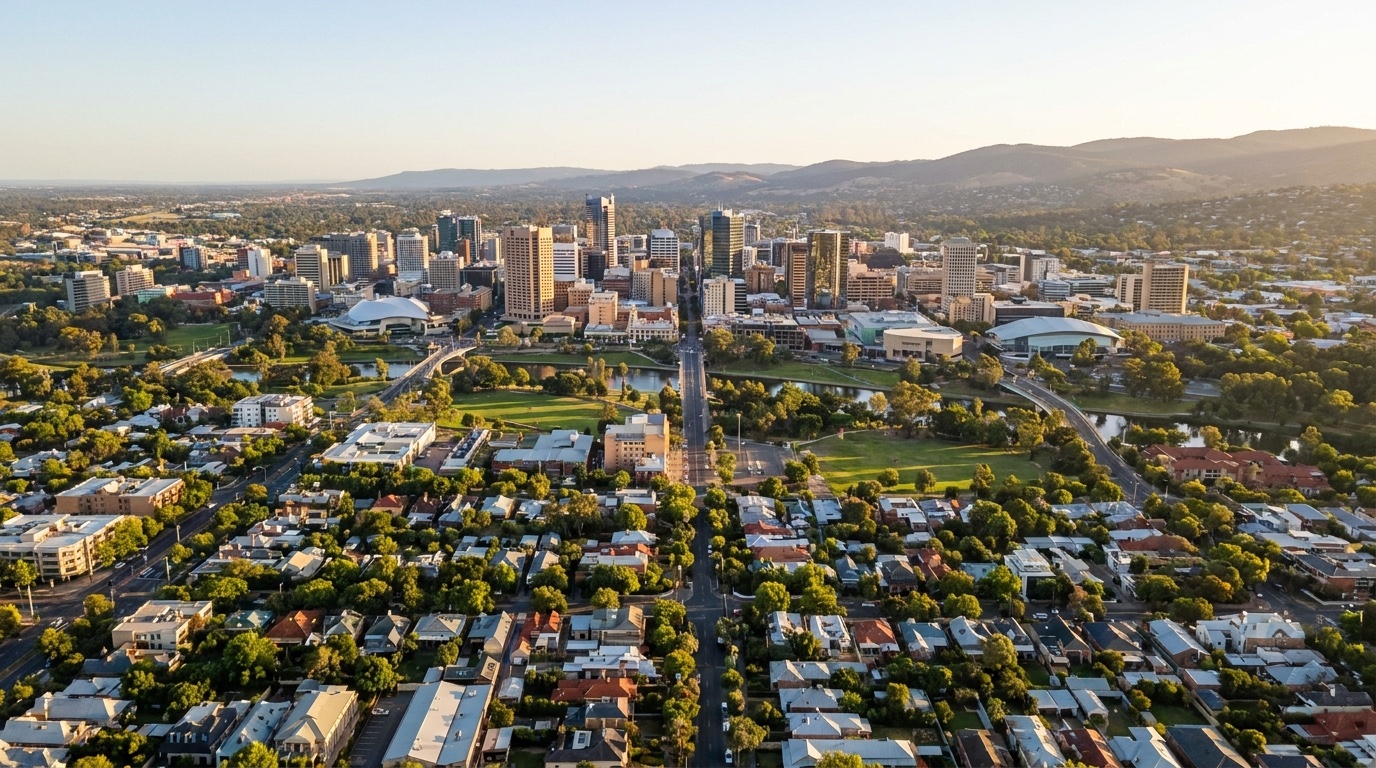
Selling a house privately in Adelaide
Adelaide has been one of the strongest and steadiest housing markets in the country through the last few years, with the median house price near $1.01 million in 2026 and still rising in many suburbs. That matters for a private sale, because even a 2.1% commission on $1.01 million is more than $21,000 before GST, and the percentage climbs with the price even though the work does not. The higher your Adelaide sale price, the larger the commission you avoid.
Adelaide runs both auctions and private treaty, and private treaty with a clear price suits a private seller well: you set the number, hold weekend open inspections, and let buyers make written offers on the contract. Lead with the things Adelaide buyers pay for: land size, a functional floor plan, outdoor entertaining, off-street parking, solar, the school zone, and, in the inner suburbs, the character of a bluestone or return-verandah villa. The same private sale approach works across regional SA, from the Barossa and the Fleurieu to Gawler and Mount Gambier, with local comparable sales doing the pricing work.
One thing to understand about a steady, rising Adelaide market is buyer psychology. Well-priced homes can attract several offers quickly, and buyers know it, so they move fast and firm. A private treaty sale with an honest, evidence-based price is a relief to those buyers, because they can inspect, arrange their finance and building inspection, and put a considered written offer on the table without the theatre of an auction. As a private seller, that transparency is an advantage you can lean into rather than a weakness.
Common mistakes SA private sellers make
- Getting the Form 1 wrong or late. The Form 1 must be complete, accurate and served on the buyer with or before the contract. An incomplete or incorrect disclosure can hand the buyer a way out, so have your conveyancer prepare it before you go to market.
- Treating a signed contract as locked. SA gives the buyer two clear business days of cooling-off in a private treaty sale. Do not count the deal as done until that window passes.
- Overlooking the conditions. The price is only half the offer. A high number weighed down with a long finance clause or a subject-to-sale condition can be worth less than a lower, cleaner offer. Read every condition and its date.
- Overpricing on emotion. Your home is worth what a buyer will pay, not what it means to you. Price to the comparables.
- Weak photography and copy. The listing decides who inspects, and every missed open is a lost bidder.
- Slow follow-up. Buyers need several touchpoints. Reply quickly and chase every open inspection.
SA private sale checklist
Work this list top to bottom and you will not miss a step.
- Research comparable sales and set a defensible price.
- Prepare and present the home, then book professional photography.
- Engage a conveyancer or solicitor and have them prepare the Form 1 and contract.
- Gather title details, strata or community documents, rates and approvals so you can answer buyer questions fast.
- List on the major portals through a licensed platform, and add a signboard and social posts.
- Respond to enquiries fast and run small-group open inspections.
- Follow up every open inspection within 24 hours.
- Negotiate on price and terms, and have your conveyancer check the contract before anyone signs.
- Sign the contract, serve the Form 1, take the deposit, and let the two-day cooling-off period run.
- Manage the conditions and their dates, complete settlement through PEXA, and hand over the keys once Land Services SA registers the transfer.
This guide is general information about selling property in SA, not legal, financial or tax advice. Rules and figures current to mid-2026. Confirm your situation with an SA conveyancer or solicitor, and see Consumer and Business Services, Land Services SA and the ATO for current requirements. Your main residence is generally exempt from capital gains tax; an investment property may not be.
Frequently asked questions
Can I legally sell my own house in South Australia?
Yes. No SA law forces you to use an agent. You can sell privately and run the pricing, marketing and negotiation yourself. The only thing you cannot do is list directly on realestate.com.au or Domain, which is why private sellers use a licensed platform to reach those portals.
What is a Form 1 Vendor Disclosure Statement?
The Form 1 is SA’s vendor disclosure statement, required under Section 7 of the Land and Business (Sale and Conveyancing) Act 1994. It discloses the title particulars, encumbrances, council and statutory information, and any mortgage or charge over the property. In a private treaty sale it is served on the buyer with or before the contract, and serving it starts the cooling-off period. Your conveyancer normally prepares it.
Is there a cooling-off period when selling a house in SA?
Yes. SA gives a private treaty buyer two clear business days of cooling-off, running from when they receive the signed contract and the Form 1. It does not apply to a purchase made at auction. So a signed SA contract is not instantly unconditional, and you should build the two-day window into your timeline.
Do I need a conveyancer to sell privately in SA?
You need a licensed conveyancer or a solicitor. SA’s conveyancer profession is regulated by Consumer and Business Services, and a conveyancer is usually cheaper for a standard sale, preparing the Form 1, the contract and settlement. A solicitor suits anything complicated. Budget around $800 to $1,800.
How much does it cost to sell a house privately in SA?
Usually $2,500 to $5,000 all in: a conveyancer, a portal listing package, photography and a signboard. There is no percentage commission.
Can I list my property on realestate.com.au without an agent?
Not directly. The portals only accept listings from licensed agencies. Unreserved holds the licence, builds the listing and publishes it on the major portals on your behalf while you keep control.
How long does settlement take in South Australia?
The settlement period is negotiated in the contract and commonly runs around 30 to 60 days from the signed contract. It completes electronically through PEXA and registers with Land Services SA on the day.
Can I sell my Adelaide property without an agent?
Yes. Adelaide owners sell privately the same way as the rest of SA, and with a median house near $1.01 million, the commission saved runs to roughly $21,000 before GST, even at a 2.1% commission.
How do I work out what my SA home is worth?
Start with comparable sales nearby from the last three to six months, then sharpen it with Unreserved’s AI valuation tool, which weights the features buyers in your suburb pay for.
Is selling privately cheaper than using an agent in SA?
Usually by tens of thousands. A private sale costs $2,500 to $5,000; at a 2.1% commission, an agent on a median Adelaide house charges around $21,000 before GST, plus marketing.
The bottom line
Selling a house privately in SA is legal, well supported and, on a median Adelaide price, worth around $16,000 to $19,000 to you. Understand the Form 1 Vendor Disclosure Statement and the two-day cooling-off period, price to current comparables, present the home well, reach buyers through a licensed platform, and negotiate with patience through to a signed contract and settlement. Do those things and you keep the commission while running a campaign that looks every bit as professional as an agency one. If you sell across the border, we have companion guides for Western Australia, New South Wales and Queensland. For a wider walk-through of the whole journey, see our selling your home privately guide.
ABOUT THE AUTHOR
Ben Williams
Connect with Ben on LinkedIn →
Ben spent 15+ years as a licensed estate agent and conducted over 2,000 auctions before founding Unreserved. He holds a Bachelor of Applied Science (Property & Valuation) from RMIT and is licensed across VIC, NSW, QLD, SA, and WA.
What a brilliant product
“The process was so straightforward, and having access to direct questions and data from buyers meant we didn’t have to second-guess what an agent was telling us. We’re thrilled with the price we got, and how affordable the support was. I’d definitely sell with Unreserved again.”
Maddie R · Verified seller · Hawthorn VIC
READY WHEN YOU ARE
Sell your SA home, and keep the commission.
Get a free AI valuation built on real Adelaide and SA comparable sales, and see how much you keep by selling on a flat fee.
Selling privately in another state?
The paperwork changes at every border. Pick yours.