SELLING STRATEGY · 11 MIN READ
How to sell your house fast
Selling quickly and selling cheaply are not the same thing. What actually moves a property in weeks instead of months, and how to shorten your campaign without discounting the asking price.

Most sellers who want a quick sale assume there is a trade-off. Sell fast, accept less. Hold out for the price, wait longer. It is the assumption behind almost every conversation about time on market, and it is wrong often enough to be worth correcting.
The homes that sell in the first fortnight are rarely the cheapest ones. They are the ones priced against real evidence, presented properly before a camera came near them, and pushed in front of every active buyer in the area while the listing was still new. Speed is a by-product of demand. Discounting is what happens when demand never showed up.
How can I sell my house fast?
The fastest way to sell your house is to combine accurate pricing with a strong selling strategy. Homes that are priced competitively, professionally presented and widely marketed typically attract more buyers, more inspections and stronger offers sooner. While every property is different, the right strategy can often reduce time on market without unnecessarily lowering your asking price.
| Quick fact | Answer |
|---|---|
| Read time | 11 minutes |
| Best for | Homeowners preparing to sell |
| Difficulty | Beginner |
| Reviewed by | Ben Williams, Founder of Unreserved |
| Applies to | Australia, all states and territories |
Key takeaways
- Selling quickly is not the same as accepting the first offer that arrives.
- Correct pricing is the single biggest factor influencing speed of sale.
- Presentation and marketing work by increasing competition, not by lowering the price.
- Premium advertising placement usually pays for itself inside the first two weeks.
- Strategy should change with market conditions. The fundamentals do not.
Can you sell a house fast without dropping the price?
Yes, and it happens every week. The properties that go under offer in ten days are usually the ones several buyers wanted at the same time.
That is the mechanism worth understanding. A fast sale is not the reward for being cheap. It is the result of enough qualified buyers seeing the property in the same short window and realising they are competing. When three buyers want the same home in the same fortnight, the sale closes quickly and the price holds. When one lukewarm buyer turns up in week five, the seller ends up negotiating against nobody, which is the worst position in the transaction.
Discounting produces speed too, but it is the expensive version of the same result. Every strategy in this guide is aimed at the other route: creating enough demand that the price never has to move.
A fast sale is not the price of a discount. It is the evidence that you priced and marketed the property correctly in the first place.
Ben Williams, Founder of Unreserved
What actually determines how quickly a home sells?
Seven variables account for nearly all of it. You control four outright, influence two, and cannot touch the last one.
| Driver | How much control you have | What it does to your timeline |
|---|---|---|
| Asking price | Full control | Sets whether buyers see the listing at all. The largest single lever on time on market. |
| Presentation | Full control | Determines how many enquiries convert into inspections, and how many inspections convert into offers. |
| Photography and copy | Full control | Decides whether a buyer scrolling a portal stops on your listing or the next one. |
| Marketing reach | Full control | Governs how many of the active buyers in your area ever learn the property exists. |
| Responsiveness | Full control | Buyers who wait two days for a reply have usually booked something else by then. |
| Property type and location | Fixed | Sets the size of your buyer pool. It changes the strategy, not whether a sale is possible. |
| Market conditions | No control | Alters how many buyers are active and how quickly they commit. Read it, do not fight it. |
Five of the seven are decisions, not circumstances. That is where a slow campaign is usually lost.
Put the ones you control together and the pattern is straightforward.
Ben’s insightSellers ask me which single thing they should fix to sell faster. It is almost always the price, but the honest answer is that these compound. A well-priced home with weak photos still underperforms, and beautiful photos cannot rescue a listing that is a hundred thousand dollars above the comparable sales. You need them working together, which is why a campaign built in the fortnight before launch beats one patched together in week four.
The 12 strategies that help homes sell faster
In rough order of impact. The first four are worth more than the remaining eight combined, though the later ones are cheaper and faster to implement.
Price it correctly from day one
Buyers search in price brackets. A home listed at $1.05 million when the evidence supports $980,000 disappears from the search results of every buyer capped at a million, and looks poor value to everyone above it. You lose both audiences at once.
The common mistake: treating the asking price as an opening position to be negotiated down. Buyers do not negotiate on listings they never opened.
Start from recent comparable sales within a couple of kilometres, from the last three to six months, for properties genuinely like yours. A free AI property valuation reads those sales and returns a defensible range in about a minute, and our guide on how to price your home covers turning that range into an advertised figure. That same number is also what tells you how much equity you have, which is usually the real question sitting behind the price.
Present the home properly before anyone photographs it
Presentation is the cheapest speed you can buy. Decluttering, a deep clean, neutral styling and tidy landscaping cost hundreds to low thousands and change how every subsequent buyer experiences the property, online and in person.
The common mistake: booking the photographer first and fixing the house afterwards. Those photos will represent the property for the entire campaign.
Our four-week preparation plan sequences the work so the house peaks the week the camera arrives, and the pre-sale checklist is the short version if you are already close to launch.

Invest in high-quality photography
Portal behaviour is brutal and well documented: buyers scan the first image, then decide. Professional photography with correct exposure, straight verticals and a considered shot order is the difference between a listing that gets opened and one that gets scrolled past at the same price.
The common mistake: phone photos taken on an overcast afternoon, or a cheap package with too few images and no floorplan. Buyers read missing rooms as something being hidden.
Include a floorplan. Listings with one hold buyer attention markedly longer, and it filters out the enquiries that were never going to suit, which saves you inspection days.

Use premium listing placement
Standard portal listings sit below the paid placements and drop down the results as newer stock arrives. A premium or highlight upgrade on realestate.com.au and Domain keeps the property near the top of the page during the fortnight when it matters.
The common mistake: treating advertising spend as a cost to minimise. The cost of an extra six weeks on market is almost always higher than the upgrade.
We break the tiers and their prices down in realestate.com.au upgrades explained and real estate advertising costs.
Write listing copy that sells the lifestyle, not the layout
Most listing descriptions read like a building inspection. Three bedrooms, two bathrooms, gas heating. Buyers already have that from the summary fields. The copy has to do something the specifications cannot, which is show them what living there is like.
The common mistake: opening with the property type instead of the single best thing about the home. And be specific: “walk to the station in seven minutes” outperforms “convenient to transport”, because one is a fact a buyer can picture and the other is filler.
Maximise exposure across every platform buyers use
The portals are the foundation, not the whole campaign. Social advertising targeted at the suburbs your buyers are moving from, email alerts to registered buyers, a signboard for local traffic and video for the listings that suit it all add reach the portals do not cover on their own.
The common mistake: assuming a portal listing reaches everyone. It reaches everyone actively searching, which is a fraction of the people who would buy your house if they knew it was available. Every buyer who never learns the property exists is a day added to your campaign.
Make inspections easy to attend
Every restriction on inspection times removes buyers. A single Saturday half-hour excludes anyone working weekends, anyone interstate, and anyone whose week does not happen to be free at eleven on a Saturday.
The common mistake: declining private inspections because they are inconvenient. The buyer who asks for a Tuesday evening viewing is usually the motivated one.
Run twice-weekly opens where you can, offer midweek times, and use our inspection preparation guide so the house presents the same way at every one of them.
Respond to buyer enquiries within the hour
Enquiry response time is the most underrated variable in the whole process. A buyer who emails four listings on a Sunday night inspects the ones that reply first, and by the time a slow seller responds on Tuesday, that buyer has already seen three houses.
The common mistake: letting enquiries queue until the end of the day, or worse, until the agent gets to them. This is one area where selling privately has a structural advantage: there is no intermediary between the buyer’s question and the person who knows the answer.
Target the right buyers rather than all buyers
Every property has a most-likely buyer. A four-bedroom home near a primary school sells to a different person than a low-maintenance townhouse near the station, and they are reachable through different channels with different messages.
The common mistake: generic marketing aimed at everyone, which lands properly with nobody. Work out who the property suits, then aim the copy, the images and the paid social targeting at that person. Narrower targeting produces more enquiries, not fewer.
Time your launch properly
Launch midweek so the listing is indexed, alerted and shared before Saturday, when browsing peaks. Avoid going live the week of a public holiday, a major sporting final or the fortnight either side of Christmas, when buyer attention collapses.
The common mistake: launching before the marketing is finished, then adding photos and a floorplan in week two. The listing burns its freshness on an incomplete version of itself.
Whether the wider market favours you is a separate question, and one our guide on whether now is a good time to sell works through.
Create competition between buyers
Competition is what converts interest into offers. A defined deadline, whether an auction date or a set closing date for offers, forces buyers to make their decision in the same week rather than waiting to see what else comes to market.
The common mistake: open-ended private treaty campaigns with no pressure at all. Buyers who feel no urgency behave accordingly.
Be transparent about the process. Manufactured urgency is easy to spot and buyers who suspect they are being played walk. Real deadlines work because they are real.
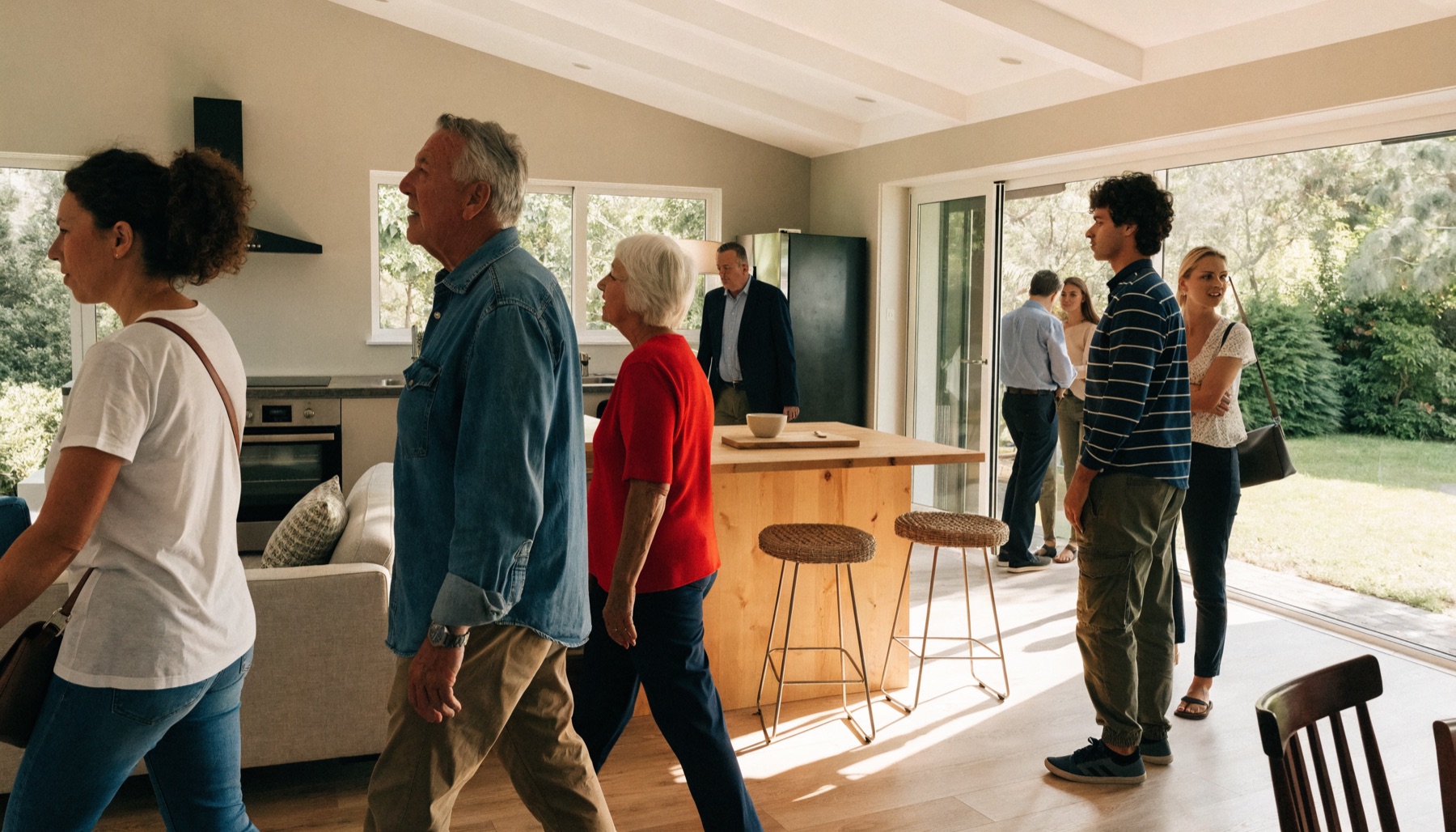
Review the strategy fast if interest is low
Two weeks of data tells you most of what you need. Strong views but few enquiries usually means the price is wrong. Strong enquiries but few inspections points at the photos or the copy. Plenty of inspections and no offers is a presentation or expectation problem.
The common mistake: waiting six weeks to change anything, by which point the listing carries a days-on-market number that buyers read as a warning.
We wrote a full diagnostic on the most common version of this in high views, low enquiries.
What a brilliant product
“The process was so straightforward, and having access to direct questions and data from buyers meant we didn’t have to second-guess what an agent was telling us. We’re thrilled with the price we got, and how affordable the support was. I’d definitely sell with Unreserved again.”
Maddie R · Verified seller · Hawthorn VIC
Find out what your home is actually worth
A free AI valuation reads the comparable sales around your address and returns a defensible price range in about a minute. It is the first step in every fast sale.
Get Free Instant ValuationWhy pricing is the biggest driver of speed
Everything else on the list adjusts your result by a margin. Price determines whether there is a result to adjust.
Buyers do not browse property, they filter it. They set a maximum, tick the suburbs and the bedroom count, and work through what comes back. A property priced above its evidence is not being rejected by those buyers. It is invisible to them. The people who do see it are comparing it against better homes in a higher bracket, where it looks like poor value.
Then the second problem starts. A listing that sits unsold accumulates a days-on-market figure every buyer can see, and they read it as information. Six weeks in, the question stops being what the home is worth and becomes what is wrong with it. The listing has taught buyers to expect a discount.
| Weeks on market | What buyers assume | What it does to your position |
|---|---|---|
| Week 1 to 2 | New to market, priced to sell | Strongest enquiry and strongest offers. Competition is possible. |
| Week 3 to 4 | Not selling as quickly as expected | Enquiry thins. Buyers start waiting rather than acting. |
| Week 5 to 8 | Something is wrong, or the seller is unrealistic | Offers arrive below the range the same buyers would have paid in week one. |
| Week 9 and beyond | Motivated seller, room to negotiate | The listing is now competing on price alone, which is where discounting begins. |
Overpricing rarely costs a seller time alone. It usually costs the price as well.
Ben’s insightThe most expensive mistake I see is a seller choosing the highest appraisal they were given. An appraisal is an opinion, and some are pitched high to win the listing. Comparable sales are facts. When those two disagree, the sales are right, and the eight weeks it takes to prove that are eight weeks you cannot get back.
How premium listings reduce time on market
Portal advertising does one job. It closes the gap between your property existing and your buyer knowing about it. Premium placement closes that gap faster.
On realestate.com.au and Domain, listings are ranked, not just displayed. Standard listings sit below the paid tiers and slide down the page as newer stock arrives. Upgraded listings hold a larger card, a higher position and a longer share of attention, which matters most in the fortnight when the largest number of buyers will ever look at your property.
- Higher placement in search results, where most buyers stop after the first page or two.
- Larger listing cards with more images, which raises the click-through rate before a buyer has read a word.
- Inclusion in portal email alerts sent to buyers who registered for properties like yours.
- Social and remarketing placement, which reaches buyers who are not actively searching this week but would move for the right home.
The arithmetic is usually simple. A premium upgrade costs hundreds to low thousands depending on the tier and the market. Our advertising costs breakdown has current figures. A month of extra time on market, and the price erosion that tends to come with it, costs considerably more than that.
Ben’s insightAdvertising is the only part of a campaign where under-spending is guaranteed to cost you money. You can over-invest in styling and see nothing back. Reach either happens or it does not, and if it does not, the buyer who would have paid your price simply never finds out the house is for sale.
Why the first two weeks matter most
Buyer interest in a new listing is front-loaded and it does not recover. Portals surface new stock, alerts fire once, and every buyer who has been watching that suburb for months looks on day one. That audience is the largest it will ever be.
Typical enquiry pattern for a residential listing. The exact numbers vary by market and property type, but the shape does not. Roughly two-thirds of the buyer attention a listing will ever receive arrives in the first fortnight.
This is why an unfinished launch is so expensive. Adding a floorplan in week three, or upgrading the advertising in week four, spends money on the smaller audience. The buyers you most wanted have already formed a view and moved on.
It is also why a fast strategy review matters. If the first fortnight produces traffic but no enquiries, that is a complete answer about the price, delivered while you can still act on it cheaply.
Selling privately vs using an agent
Sellers assume an agent is faster. The process says otherwise. Both routes run the same stages in the same order, and the only genuine difference is who performs each one.
| Stage | Selling privately | Traditional agent |
|---|---|---|
| Research | You | You, then the agent’s appraisal |
| Valuation | AI valuation and comparable sales | Agent appraisal |
| Photography | You book the photographer | Agent arranges it |
| Marketing preparation | You, or a platform that does it for you | Agent prepares |
| Listing goes live | Same portals, same placement | Same portals, same placement |
| Buyer enquiries | Direct to you | Through the agent |
| Open homes | You host | Agent hosts |
| Negotiation | You, with the offers in front of you | Agent, on your instructions |
| Contract | Your conveyancer | Agent plus your conveyancer |
| Settlement | Your conveyancer | Your conveyancer |
Two rows differ in substance. The rest differ only in who does the work, and none of them change the buyer’s timeline.
Speed does not live in either column. It lives in the price, the presentation and the reach, which are identical decisions on both routes. A private seller listing on realestate.com.au with a premium upgrade appears in exactly the same place as an agent’s listing, because it is the same product.
Two differences are worth weighing. Agents may hold a database of buyers they have met recently, which can shorten the search on the right property. Private sellers answer enquiries themselves, usually within minutes rather than hours, which shortens it on every property.
Then there is what it costs. At 1.8% to 3.5% commission, a $1.2 million sale hands over $21,600 to $42,000. That money buys the work in the middle column, not a faster result. Unreserved charges a flat fee for the same campaign, including the premium portal placement, and you keep the difference. Our savings calculator runs the numbers on your own price, and how it works covers the process end to end.
Ben’s insightIf an agent could genuinely sell your house faster than the same campaign run privately, the fee would be easy to justify. In practice they are running the identical portal listing you would run. What you are buying is the labour and the negotiation, which is a fair thing to pay for, but it should be priced like a service rather than as a percentage of your equity.
How long does it typically take to sell?
Around a month on market is the national norm, but the spread between states is far wider than most sellers expect.
| State | Typical time on market | What is driving it |
|---|---|---|
| WA | About 11 days | Sustained buyer demand against limited listings. The fastest market in the country by a clear margin. |
| QLD | About 21 days | Interstate migration keeps the buyer pool deep, particularly in the south east. |
| ACT | About 29 days | A small, stable market with a narrow buyer base and steady public sector employment. |
| VIC | About 30 days | High listing volumes mean buyers have options, so presentation and pricing do more work here. |
| SA | About 30 days | Strong recent price growth from a low base, with demand concentrated in inner Adelaide. |
| NSW | About 31 days | Wide variation inside the state. Sydney moves faster than most regional markets. |
| TAS | About 31 days | A thinner buyer pool and softer conditions than the mainland east coast. |
| NT | About 39 days | The smallest buyer pool in the country, which lengthens every campaign. |
Source: Cotality (CoreLogic) median days on market, 2025 full year. Figures are medians, so half of all sales in each state took longer. As at July 2026 the national median has drifted out to roughly 32 days, about 30 across the capitals and 36 across regional markets, as listing volumes rose. Refresh these figures quarterly.
Three things shift your position within that range: property type, since houses in family suburbs generally move faster than apartments in dense markets; location, because metropolitan campaigns run shorter than regional ones with smaller buyer pools; and conditions, since the same house sells in half the time in a rising market as in a soft one.
Add settlement on top. Time on market ends when contracts are signed, and settlement typically runs another 30 to 60 days depending on the state and what the parties agree. Our guide to contracts of sale and vendor statements covers what has to be ready before you can accept an offer at all, and having it ready early is itself a speed strategy. For the final stage, settlement day explained walks through what happens between signing and the keys changing hands.
Common mistakes that slow a sale
Almost every slow campaign contains at least three of these.
- Overpricing at launch. The single most common and most expensive error, because it removes buyers before they ever see the property.
- Weak photography. Buyers judge the listing in under two seconds, and they only get one version of it.
- Minimal advertising. Saving a thousand dollars on reach to spend six extra weeks on market is a bad trade at any price point.
- Too few inspection times. Every restriction removes buyers who would otherwise have attended.
- Cluttered presentation. Buyers cannot picture their life in a home full of someone else’s.
- Slow enquiry responses. The buyer who waits two days for an answer has already inspected something else.
- Ignoring buyer feedback. Four separate people mentioning the same thing is data, not coincidence.
- Leaving a stale listing untouched. A listing that has not changed in six weeks tells buyers the seller is not moving either.
Selling privately in a particular state adds its own paperwork and disclosure requirements, and getting them wrong stalls a sale after the buyer is committed, which is the most frustrating delay of all. We have state guides for Victoria, New South Wales, Queensland, Western Australia, South Australia, Tasmania and the ACT.
What actually moves the needle
If you do nothing else, do these in this order.
| Strategy | Effort | Impact on speed |
|---|---|---|
| Accurate pricing | Low | Very high |
| Professional photography | Low | High |
| Premium listing placement | Low | High |
| Property presentation and styling | Medium | High |
| Targeted digital marketing | Medium | High |
| Fast buyer follow-up | Low | High |
| Flexible inspection times | Medium | Moderate |
| Weekly performance review | Low | Moderate |
The four highest-impact items are also four of the five cheapest. That is unusual, and it is why most slow sales were avoidable.
The short version
There is no trick to selling quickly. There is a set of decisions that reliably shortens a campaign, and they are made before the listing goes live rather than after it stalls.
Price against the evidence rather than the hope. Present the home before the photographer arrives. Buy enough reach that every active buyer in your area sees it. Answer enquiries the same hour. Give buyers a reason to decide in the same week as each other. Then read the first fortnight honestly and change what is not working while changing it is still cheap.
Do those things and speed usually takes care of itself, which is the whole point. A house that sells in three weeks at the right price is not a compromise. It is what a campaign looks like when it was set up properly.
Frequently asked questions
How can I sell my house fast?
Price it against recent comparable sales rather than what you hope to achieve, present it properly before the photographer arrives, and buy enough advertising reach to put it in front of every active buyer in your area during the first fortnight. Those three decisions account for most of the difference in time on market between similar homes.
What is the fastest way to sell a house?
A short, well-supported campaign with a firm end date. Accurate pricing brings buyers in, premium portal placement makes sure they see it, and a deadline such as an auction or a set offer date concentrates their decisions into the same week instead of letting them drift.
Can I sell my house quickly without lowering the price?
Yes, and that is the normal outcome when the campaign is right. Speed comes from demand, and demand comes from reach and presentation. Discounting is what sellers fall back on when the listing was priced above the evidence at launch or never reached enough buyers to test the price properly.
Does pricing affect how quickly a house sells?
More than any other factor. Overpriced homes lose the buyers who filter them out of search results entirely, then sit long enough for the remaining buyers to treat the listing as a problem. Most homes that eventually sell after a price reduction achieve less than they would have at the correct price on day one.
Do premium listings help sell a house faster?
They shorten the time it takes buyers to find the property, which is usually where days get lost. A premium or highlight placement on realestate.com.au and Domain lifts the listing above the standard results during the fortnight when buyer attention is highest. It changes visibility, not the underlying appeal of the home.
Is it faster to sell privately or through an agent?
Neither is inherently faster. Both follow the same stages and both depend on the same drivers: price, presentation and reach. Private sellers often respond to enquiries faster because there is no intermediary, while some agents bring an existing buyer database. The campaign decides the timeline, not the label on the sign.
How long does it usually take to sell a house in Australia?
Around a month on market is typical, though it varies widely by state and property type. Cotality put the national median near 29 days across 2025, ranging from about 11 days in Western Australia to 39 in the Northern Territory. Add roughly 30 to 60 days of settlement on top of that.
What mistakes slow down a property sale?
Overpricing at launch, weak photography, advertising that only reaches a fraction of the buyer pool, restrictive inspection times, slow replies to enquiries, and leaving a listing unchanged for weeks after the market has told you it is not working.
When is the best time of year to sell quickly?
Spring and autumn carry the most buyers, but they also carry the most competing listings. Winter and the period after Christmas have fewer buyers and far fewer rival properties, which can suit a home that shows well in those conditions. Local demand matters more than the season.
How can I attract more buyers in the first week?
Launch with complete marketing rather than adding to it later. Professional photography, a floorplan, a written price guide, premium portal placement and inspection times booked before the listing goes live. A listing that arrives finished collects the whole first week of buyer attention instead of a fraction of it.
Sell faster without paying commission
Unreserved runs the full campaign for a flat fee. Premium portal placement, professional photography and AI-priced strategy, with buyer enquiries coming straight to you.
See how it works
ABOUT THE AUTHOR
Ben Williams
Connect with Ben on LinkedIn →
Ben spent 15+ years as a licensed estate agent and conducted over 2,000 auctions before founding Unreserved. He holds a Bachelor of Applied Science (Property & Valuation) from RMIT and is licensed across VIC, NSW, QLD, SA, and WA.